History of
Panshanger Park
Panshanger Lane Car Park
follow post code
SG14 2TS
Thieves Lane Car Park
follow post code
SG14 2WN
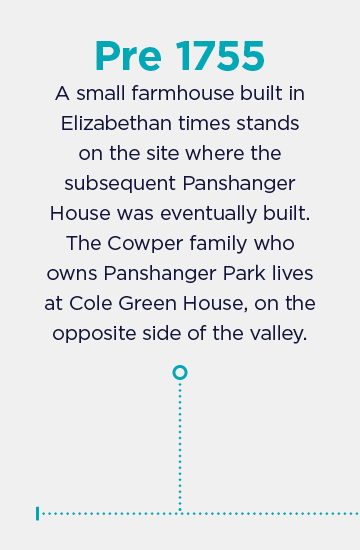
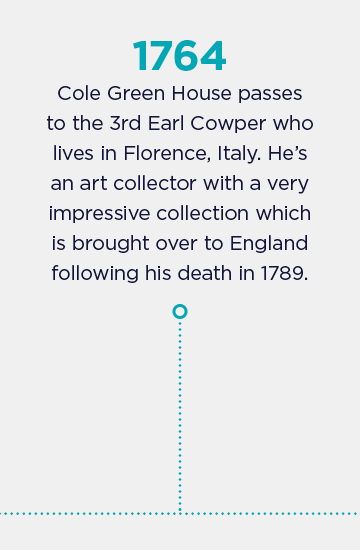
Panshanger Park was originally owned by the Cowper family
from the late 17th century to the mid 20th century. Over successive generations the Panshanger estate evolved as each
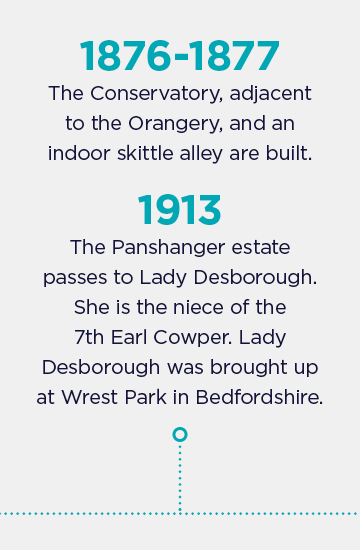
Earl Cowper put his mark on it. At its peak, the Panshanger estate comprised 10,000 acres, some of which was later purchased by Ebenezer Howard to become Welwyn Garden City.
Humphry Repton ( 1752 - 1818 )
Humphry Repton is known as being the last great landscape designer of the 18th Century. As well as being involved with the Panshanger estate, he was commissioned to work at various estates such as Woburn Abbey in Bedfordshire and Tatton Park in Cheshire.
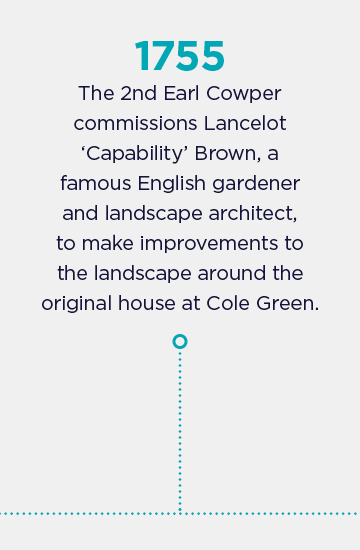
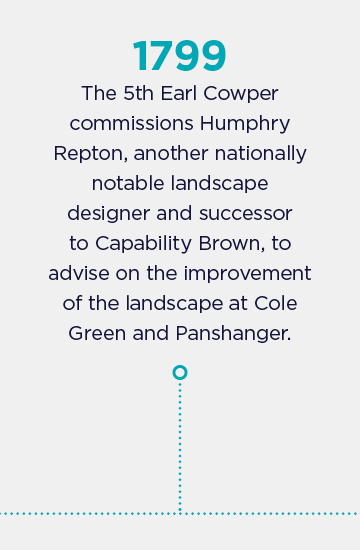
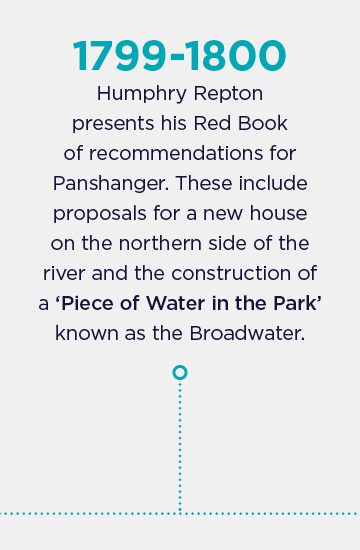
In 1795, Repton was commissioned by the 5th Earl Cowper to visit Cole Green House and make suggestions for its grounds. This included ideas for opening up views across the Broadwater lake and adding a wooden bridge to link the house to Panshanger Park. His final designs included suggestions for making use of local materials such as chalk blocks according to his theory that ‘the produce of a place should always be used in preference to any other material’.
Two of his major commissions were never carried out: a new house on higher ground overlooking Broadwater lake and an iron bridge over the River Mimram. However, many of his ideas were implemented including planting trees around Broadwater lake, creating views from Cole Green House into Panshanger Park and building a new drive from Hertford into Cole Green House so that visitors could look across at the Broadwater lake while they travelled through it.
Panshanger House
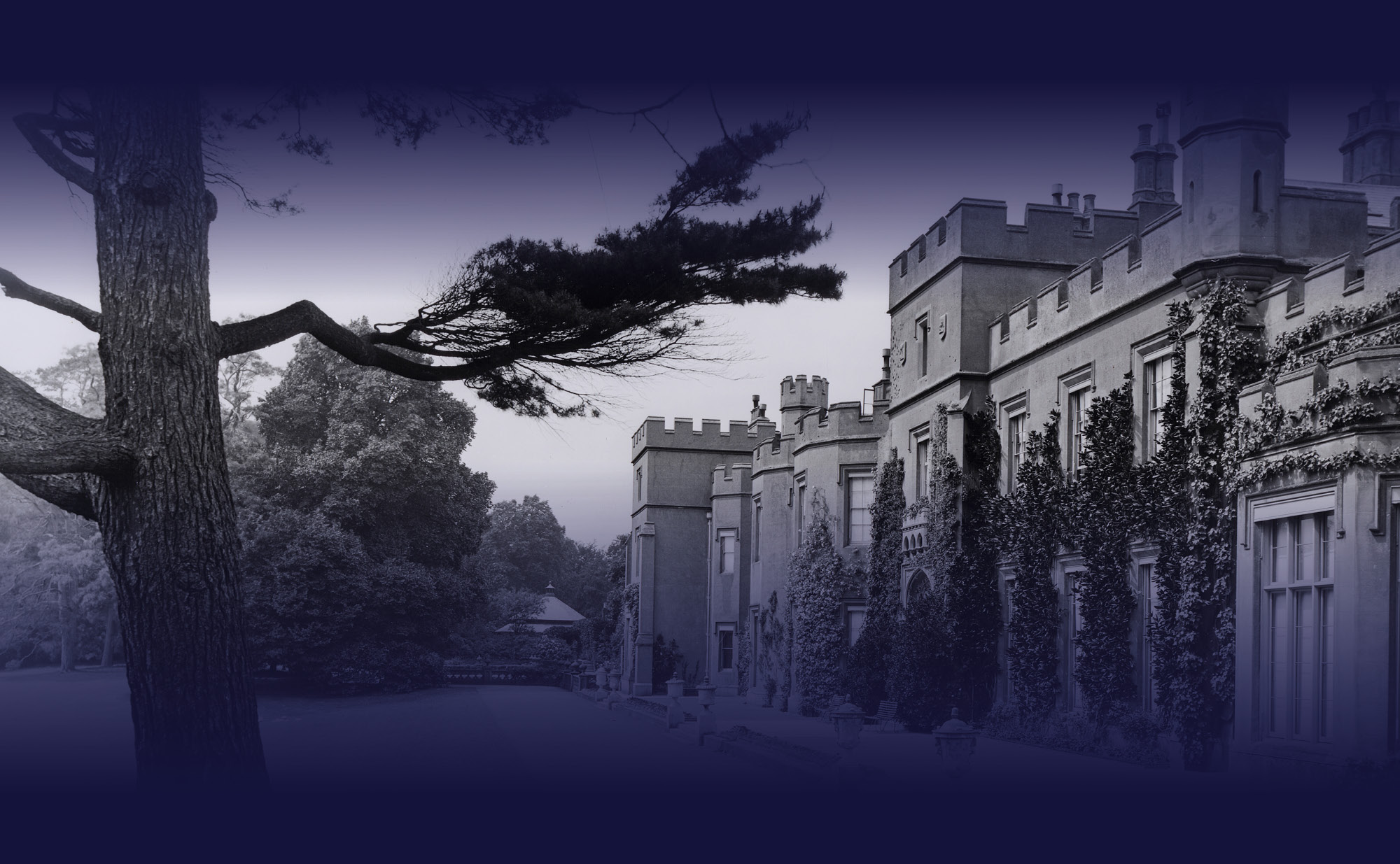
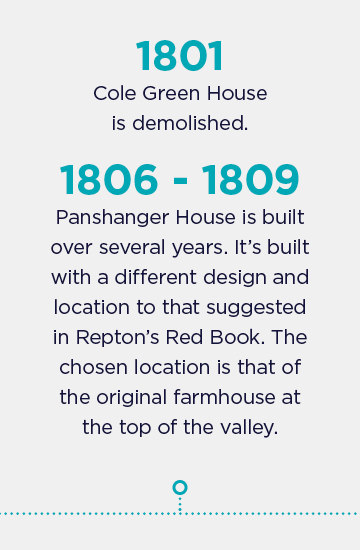
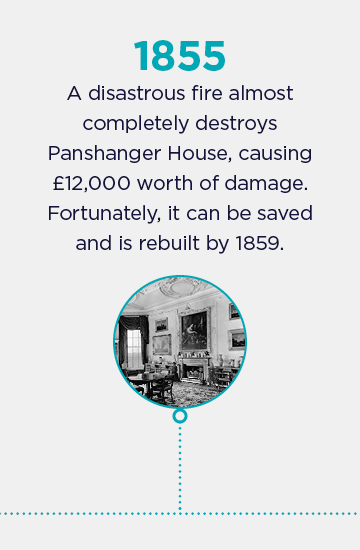
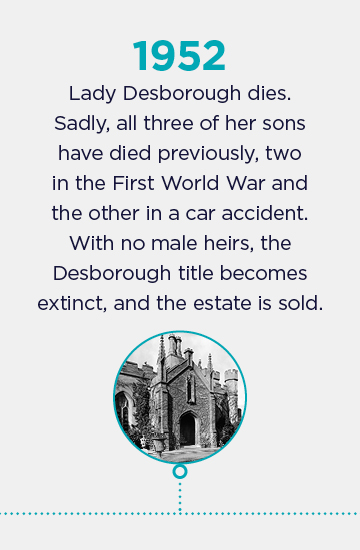
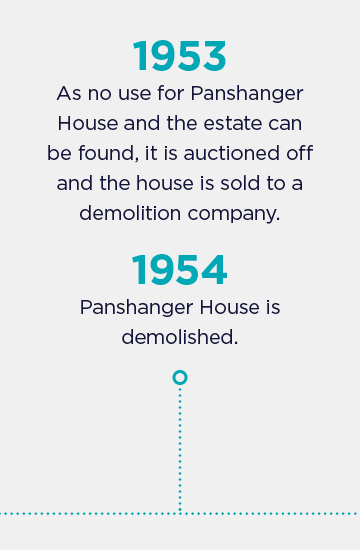
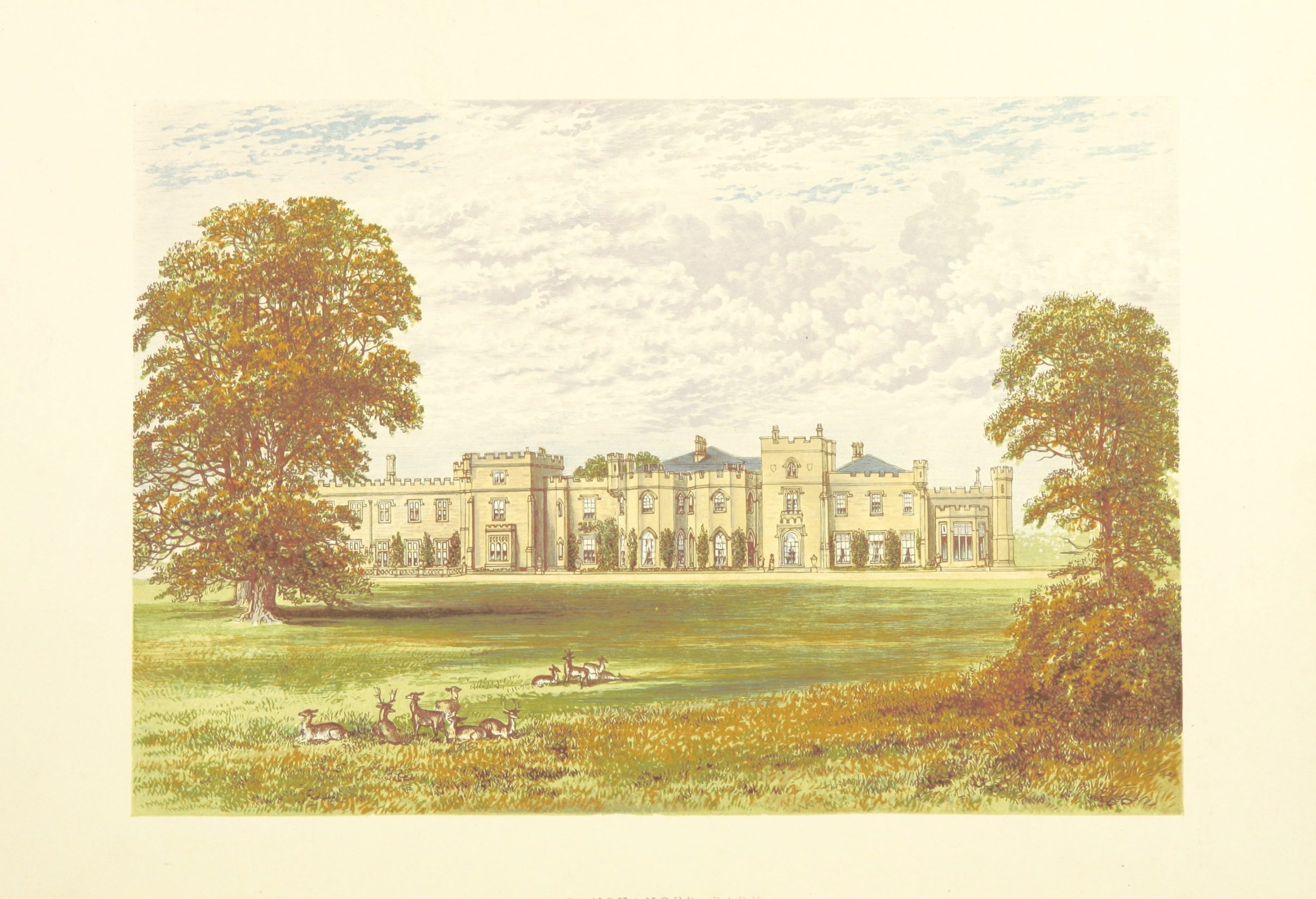
Panshanger House was built for the 5th Earl Cowper following recommendations by Humphry Repton to build a new house on the northern bank of the Mimram valley. Although Repton had put forward several potential building locations, the 5th Earl Cowper eventually decided to build it on the top of the valley. The house, which burnt in 1954 after years of neglect and looting, was built in a Gothic style and orientated to face north, making it cooler in summer when they lived at Panshanger.
The house was designed by William Atkinson and later extended by Henry Ashton. It had a central rotunda that housed a spiral staircase lit by an overhead dome light. The house also boasted one of the finest libraries in England with over 16,000 books.
The estate was inherited by Lady Desborough, who filled Panshanger with politicians and writers such as Neville Chamberlain, H.G. Wells and Vita Sackville-West. Following her death in 1952 her son sold off much of its contents before selling off parts of the estate.
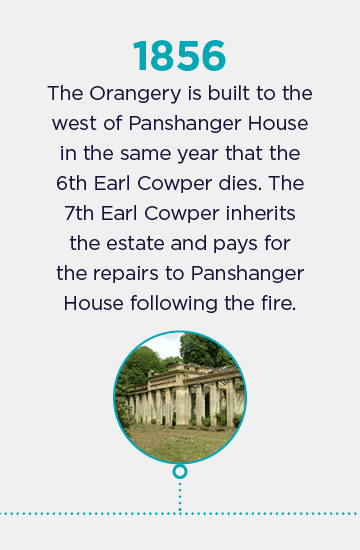
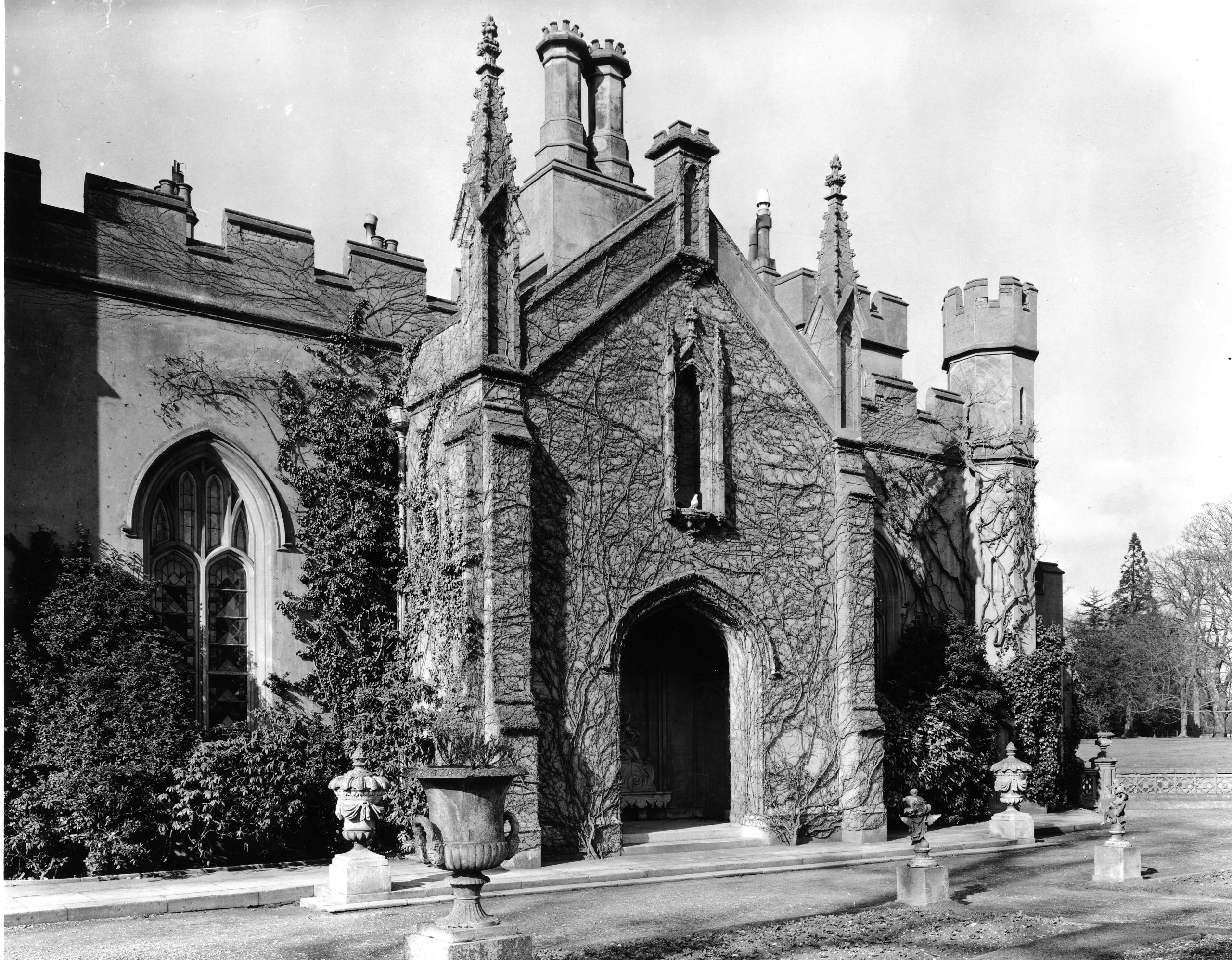
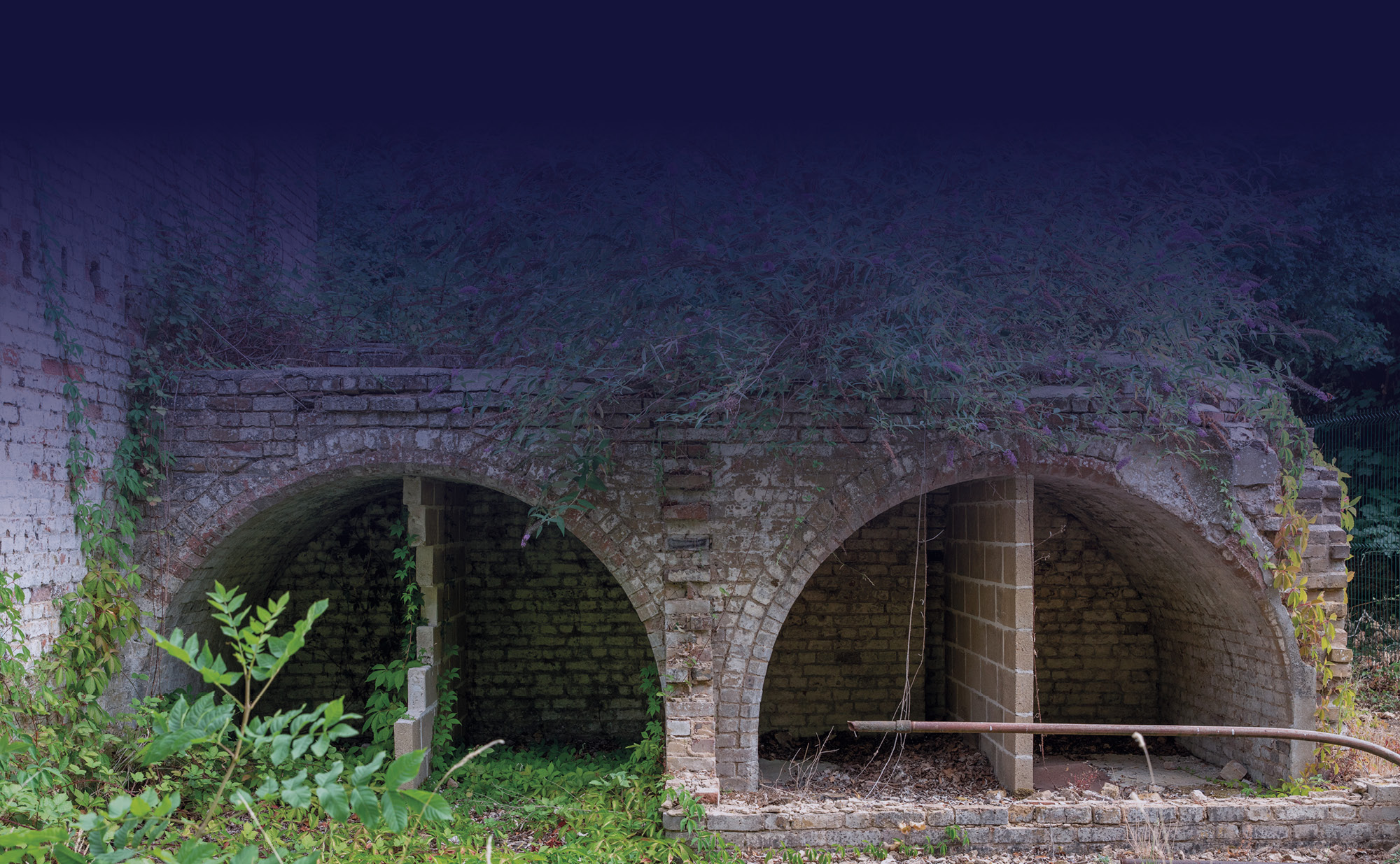
Today all that remains are some foundations and part of one wall which is now covered with ivy. The Orangery is still standing along with some outbuildings including stables and cottages.
There are plans to restore some elements such as The Orangery, The stables, houses and cottages that have survived as well as sections of formal gardens including ironwork gates.
Repton’s landscape and the Broadwater
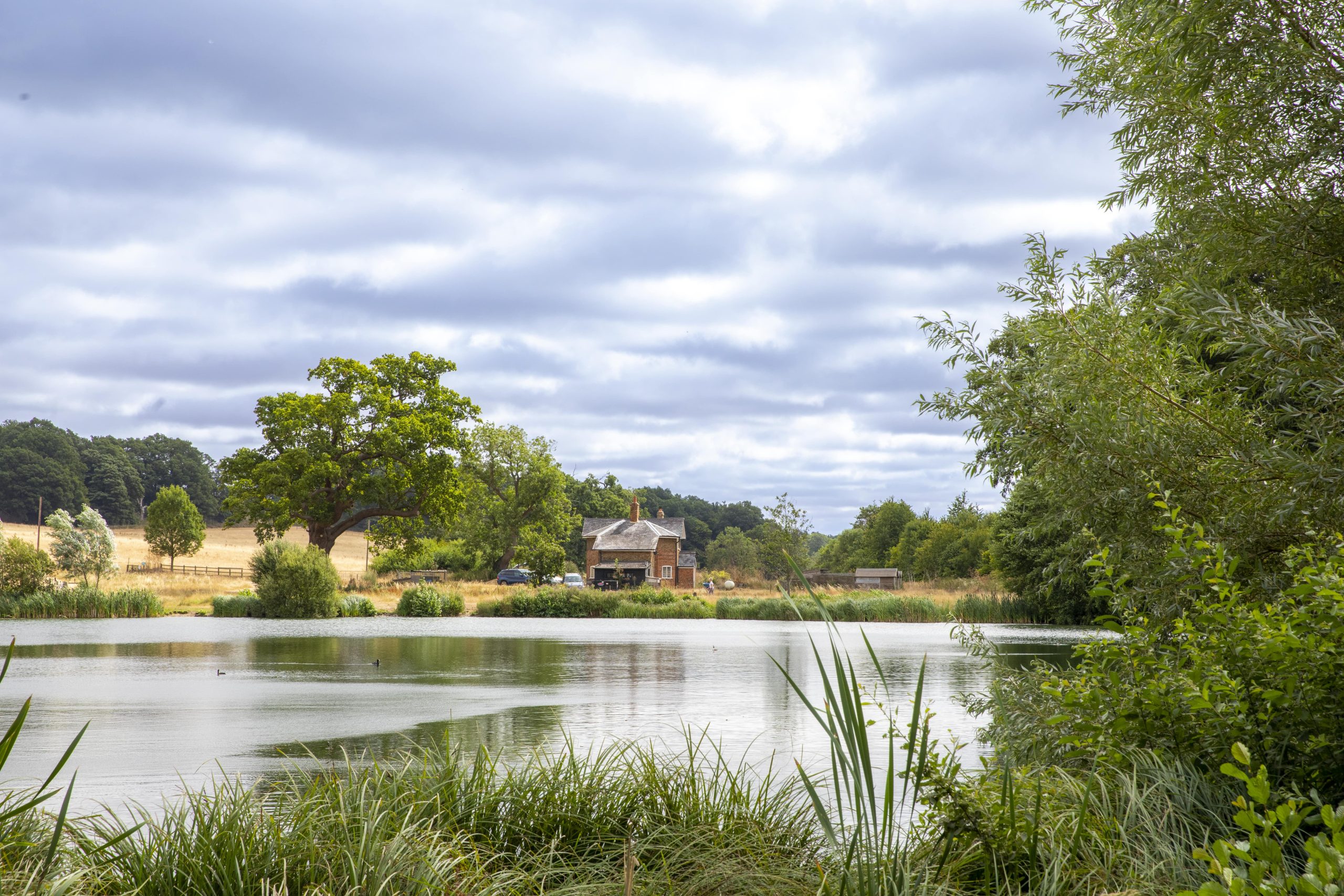
In 1799 Humphry Repton was commissioned to provide a landscape design for Panshanger Park. Repton’s designs were known for their ‘picturesque’ style, which aimed to create naturalistic landscapes that were visually appealing. He introduced the concept of the Broadwater, a large body of water that became a central feature of the park.
The Broadwater still exists today and can be viewed from the house but has not been restored as part of this project. Much of Repton’s original planting survives, including mature trees and shrubs, as well as some areas of lawn and woodland planting.
Enjoy views over Repton’s landscape and the Broadwater via the Oak Trail.
The Orangery
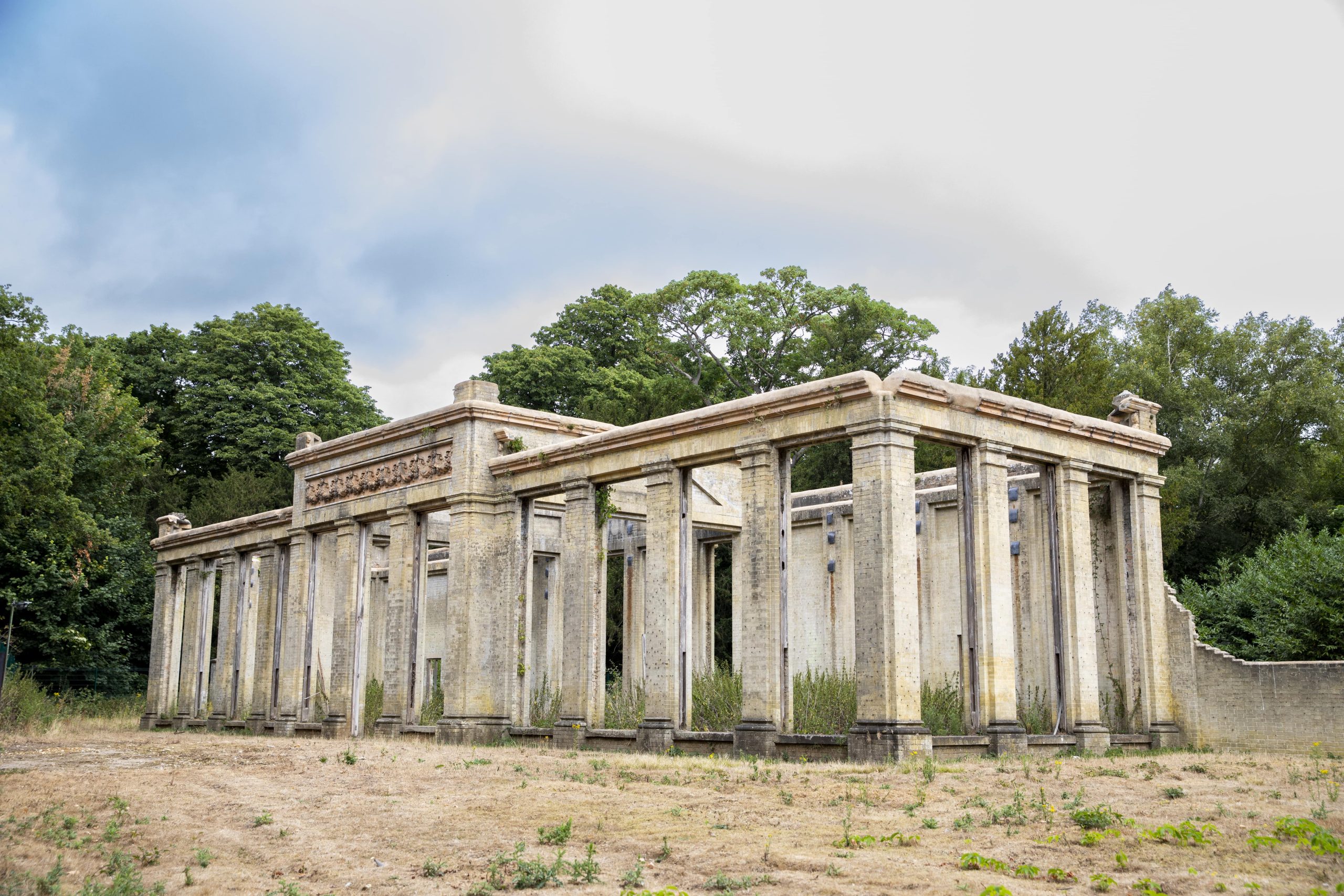
The Orangery was built to the west of Panshanger House in 1856 to replace the original glasshouses. It is one of a few such examples of ornamental Victorian glasshouses that have survived in England. It was used for growing exotic fruits and plants, including orchids and palms, during the winter months. The building is constructed from Bath stone and has a central projection with Corinthian pilasters and an entablature.
The interior has three main sections: a central area with two wings on either side. The Orangery was designed by James Pulham & Son, who were renowned for their work in creating rock gardens and ferneries.
In 2015, restoration work began to preserve this historic structure. Visit the Orangery by taking a walk around our Oak Trail.
Panshanger Great Oak
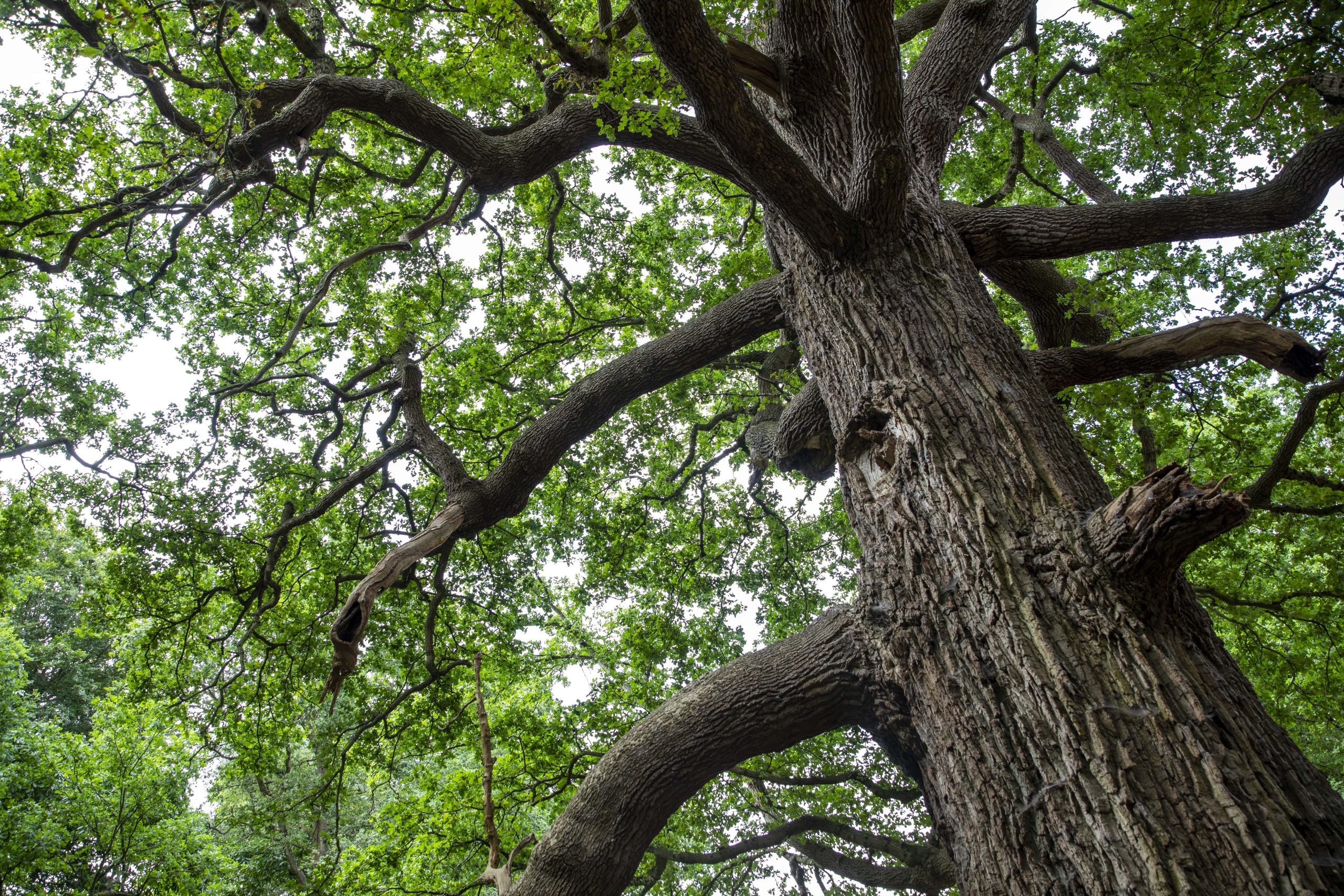
Estimated to be nearly 800 years old, the Great Oak is a veteran tree situated in the Broadwater area of Panshanger Park. It is believed to be the oldest oak in Hertfordshire and one of the oldest in England, with a girth measurement of over 7.5m (24ft), making it a truly majestic sight.
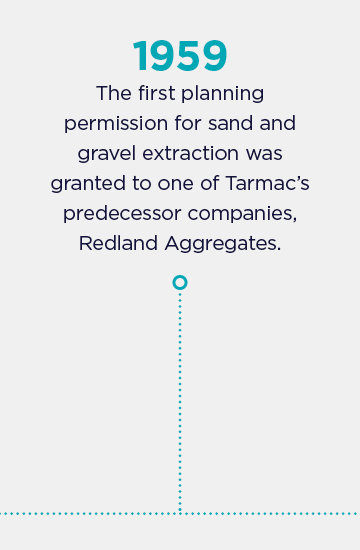
The tree has been extensively recorded by various conservation groups and societies who have monitored its health and growth over time. The Great Oak is still thriving, with recent efforts made by Tarmac to preserve this ancient living landmark for future generations.
Visit the Panshanger Great Oak by taking a walk around our Oak Trail.